
The AI Professional's Paradox: Building Systems That Protect Others While Ignoring Their Own Body
There is a profound irony in the world of artificial intelligence. The professionals building AI-powered ergonomic assessment systems — tools that use computer vision to detect dangerous postures, flag musculoskeletal risk in real time, and generate data-driven intervention recommendations — are frequently sitting in suboptimal chairs for 10 to 14 hours a day. They are building the future of workplace ergonomics while neglecting the present state of their own.
As AI reshapes how Singapore companies select and justify office furniture — moving from catalog-driven aesthetics to data-driven, outcome-measured decisions — the AI professional is in a unique position: they understand the science better than anyone. They know what sustained static sitting does to the lumbar discs. They know what hours of forward-head posture does to cervical load. They know, because they have read the research, built the models, and in some cases written the algorithms that detect these very patterns in others.
The question is not whether the Sihoo Office Chair is worth $660. The question is: what is the cost of not having it?
Who Is This Chair For?
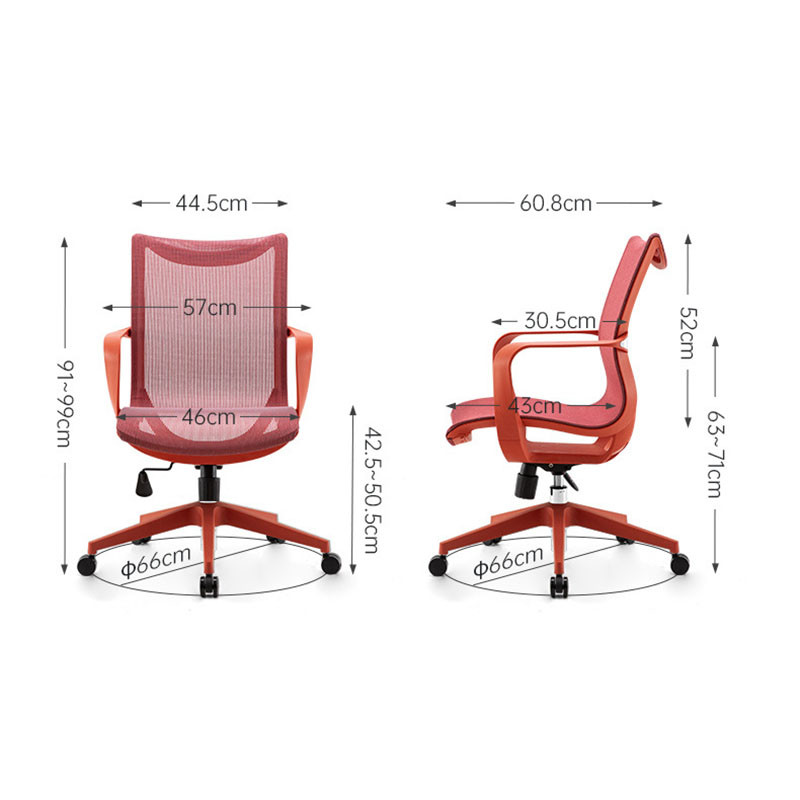
The Deep Work Specialist — AI Engineers, ML Researchers, Data Scientists
AI professionals enter states of deep cognitive focus that few other professions require — debugging model architectures, reviewing training runs, writing complex code, analysing results across multiple experiments simultaneously. These sessions are characterised by sustained, largely static sitting postures with intense forward gaze. Research consistently shows that cognitive performance in deep work degrades significantly when physical discomfort becomes a background variable competing for attention. A chair that provides perfect, undemanding physical support removes this variable entirely. The Sihoo's advanced lumbar system — adjustable in both height and depth — creates a physical environment that disappears, letting cognitive resources stay where they belong.
The Singapore AI Professional Working Non-Standard Hours
Singapore's AI sector is deeply integrated with international timelines — US West Coast investors, European research collaborators, global product deployments. This means irregular and extended working hours are the norm rather than the exception. When a Singapore AI professional works a 12-hour day aligned to a US morning standup, they are sitting in their chair from 10am to 10pm. No chair at any price point eliminates the physical consequence of this duration — but the Sihoo minimises it more effectively than any alternative available in Singapore's market.
The AI Leader Who Treats Their Body as a Performance System
The most effective AI professionals apply the same systematic, evidence-based optimisation to their personal performance that they apply to their model architectures. They read the ergonomics research. They understand that chair quality directly affects cognitive performance through the mechanism of physical discomfort reducing available working memory. They treat the Sihoo's $660 price not as furniture expenditure but as infrastructure investment — the same category as their monitor, their GPU and their internet connection.
The Professional with Medically Documented Back Issues
Back pain is not a minor inconvenience for knowledge workers — it is a productivity crisis. Research cited by Singapore's Workplace Safety and Health Institute identifies lower back musculoskeletal disorders as the leading cause of reduced working capacity among desk-based professionals. For AI professionals who have already developed back issues from years of intensive desk work, the Sihoo's clinical-grade adjustability is medical management infrastructure, not optional comfort.
Why the Sihoo Works for Singapore's AI Professionals Specifically
The document shared above makes a key prediction: furniture selection will shift from "which catalog images do we like?" to "which scenario's data profile best matches our goals for productivity, wellbeing, and space efficiency?" AI professionals already think this way. They are not buying a chair because it looks good. They are buying a chair because its technical specifications — lumbar adjustment range, seat depth options, tilt tension calibration, weight rating — match their specific physical requirements better than any alternative.
The Sihoo's key technical differentiators for Singapore users:
- Dual-axis lumbar system — adjustable in both height and forward-backward depth, addressing the positioning challenge that shorter Asian torsos create for standard Western-designed chairs
- Seat depth adjustment — critical for Singapore's shorter average leg length; allows the full seat to be used without the edge cutting into the back of the thighs
- Precise tilt tension calibration — supports the natural postural micro-variations that occur during long deep work sessions, allowing the body to move slightly without losing support
- Build quality rated for 10+ years — mechanisms that hold their calibration over years of daily use, unlike mid-range alternatives whose adjustment settings drift over months
The AI Case for Premium Ergonomic Investment
The document above describes AI's impact on office furniture selection with precision: "purchase decisions will increasingly rely on measured outcomes such as reductions in musculoskeletal complaints, fatigue, or absenteeism linked to particular furniture lines." This is exactly how an AI professional should evaluate a chair. Not "does it look good?" but "what are the measurable outcomes?"
The measurable outcomes of proper ergonomic seating for knowledge workers, supported by multiple peer-reviewed studies: 17% reduction in musculoskeletal complaints after switching from standard to ergonomic chairs; measurable improvement in sustained attention over 4-hour work sessions; significant reduction in end-of-day fatigue reported by users of properly adjusted ergonomic chairs. For an AI professional billing at Singapore's market rates, a 17% reduction in physical distraction during deep work sessions represents a return on investment that makes the Sihoo's $660 price mathematically trivial.
Real Singapore Scenarios
The ML Engineer at a Series B Startup
Wei Lin leads ML infrastructure at a Singapore AI startup that just raised Series B. He works 11-hour days regularly during model training cycles. He bought the Sihoo six months ago. His assessment: "I stopped tracking how many hours I'm sitting because I stopped noticing the chair. That's exactly what you want." His lower back pain — which had been significant enough to affect his sleep — has resolved. He considers the Sihoo the most cost-effective performance investment he's made in three years.
The AI Research Lead at a Singapore University
Dr Priya runs an AI research lab at NTU. Her team of PhD students and research associates works intensive hours during paper submission periods. She purchased Sihoo chairs for her lab's home office users after reviewing ergonomic research on sustained cognitive work and chair quality. Her rationale: "We measure everything else in this lab. It made no sense not to measure our physical working conditions and optimise them accordingly."
If you work in AI and you understand the cost of suboptimal tools, the case for the Sihoo Office Chair at $660 is not a furniture decision. It is a performance infrastructure decision. Free islandwide delivery.