
Updated May 2025 -- All specifications verified. Browse our office chair range
Upper trapezius pain — the chronic shoulder and neck tension that affects a significant proportion of Singapore's office workers — is frequently attributed to screen position or keyboard height. In many cases, the actual cause is simpler: armrests that are 2–3cm too high, causing continuous low-level shoulder elevation that accumulates over an 8-hour workday. Understanding armrest engineering explains why this problem persists — and how to eliminate it.
The Biomechanics of Shoulder Elevation
The upper trapezius muscle runs from the base of the skull and cervical vertebrae to the shoulder (acromion). Its primary action is shoulder elevation. When armrests are set above the user's natural resting elbow height, the shoulders must be continuously elevated to maintain forearm contact — sustained upper trapezius contraction throughout the working day.
EMG (electromyography) studies consistently demonstrate that armrests 2cm too high produce upper trapezius activity levels that, sustained over 8 hours, generate muscle fatigue measurable in shoulder and neck pain by end of day. The same studies show that correctly positioned armrests reduce upper trapezius activity by 30–40% compared to no armrests.
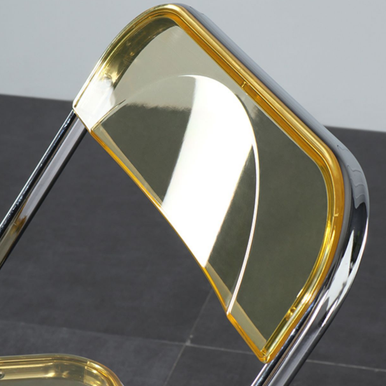
Elowen Foldable Chair -- from SGD 99 with free islandwide delivery at Linear Furnishings Singapore
Armrest Dimension Classification: Engineering Behind 1D to 5D
| Grade | Adjustments | Engineering | Suitable For | Singapore Assessment |
|---|---|---|---|---|
| 1D (Fixed) | None | Moulded position only | Meeting chairs, brief use | ❌ Not suitable for daily use |
| 2D | Height only | Worm gear or gas spring, ±40mm | Standard office — minimum adequate | ⚠️ Acceptable for 4h/day |
| 3D | Height + width | 2D mechanism + lateral slide (±25mm each direction) | Daily office use | ✅ Recommended minimum |
| 4D | Height + width + pivot | 3D + rotary cam mechanism (±30° or 360°) | Daily ergonomic use | ✅ Recommended for keyboard-intensive work |
| 5D | Height + width + pivot + fore/aft | 4D + linear slide (30mm forward/back) | Professional ergonomic | ✅✅ Best specification |
Why Pivot (the 4th Dimension) Matters for Keyboard Users
During normal desktop computer use, the forearm does not point directly forward. Typing requires slight internal rotation, mouse use requires the arm to extend slightly to the right or left, and writing involves varied forearm angles. A non-pivoting armrest pad contacts only a fraction of the forearm surface area in non-forward positions.
A 4D armrest with 30° of pivot allows the pad to remain in full forearm contact regardless of the work task — distributing loading evenly across the forearm surface and reducing localised pressure points at the ulnar styloid and olecranon that cause 'arm rest pressure' discomfort.
Armrest Manufacturing and Materials
Structure Materials
| Material | Properties | Quality Indicator | Singapore Suitability |
|---|---|---|---|
| ABS plastic | Rigid, lower impact resistance | Present in all entry chairs | Adequate, monitor for cracks after 3+ years |
| PP-GF30 (glass-fibre reinforced polypropylene) | Higher impact resistance, lighter | Modern quality specification | ✅ Good |
| Aluminium alloy | Highest strength-to-weight, corrosion resistant | Premium chairs | ✅✅ Best — also better tactile quality |
Pad Materials: Where Your Forearms Spend 8 Hours
| Material | Shore Hardness | Durability | Breathability | Singapore Recommendation |
|---|---|---|---|---|
| Bare hard plastic | Shore D 70–80 | Permanent | None | ❌ Creates pressure points |
| Standard PU foam | Shore A 45–55 | 3–5 years | Poor | ⚠️ Acceptable basic |
| Soft PU foam | Shore A 25–35 | 3–5 years | Poor | ✅ Standard |
| Gel pad | Variable — pressure-distributing | 5–8 years | None | ✅✅ Best pressure distribution |
| Fabric-covered foam | Shore A 25–35 | 4–6 years | Good — breathable | ✅✅ Best for Singapore heat |
Height Range: The Critical Issue for Singapore Users
Standard armrest height adjustment ranges from 18–27cm above the seat surface. For users below 165cm — a significant proportion of Singapore's working population — the minimum armrest height may still be above their natural resting elbow position when seated correctly.
Testing protocol: sit in the chair with your back fully against the lumbar support, feet flat on the floor, and hips at 90°. Measure from the seat surface to your elbow (forearm parallel to the floor). This is your required armrest height. If the chair's minimum armrest height exceeds this measurement, the armrests will always force shoulder elevation — regardless of other adjustments.
Common Armrest Quality Problems in Singapore
| Problem | Cause | Timeline | Prevention/Solution |
|---|---|---|---|
| Armrest wobble/rocking | Lock pin wear or plastic deformation at pivot points | Typically 2–4 years in daily use | Higher-grade 4D mechanisms have tighter tolerances — specify quality brand |
| Pad cracking | PU foam edge failure from flexing | 3–5 years from corners | Fabric-covered pads last longer; gel pads most durable |
| Height mechanism sticking | Dust/debris in worm gear mechanism | Variable — depends on environment | Regular cleaning with compressed air |
| Width slide binding | Scratching/scoring of slide channel | 1–3 years — worse in dusty environments | Lubricate slide with silicone spray annually |
| Armrest too narrow for desk approach | Fixed or inadequate minimum width | Not a wear issue — selection error | Test width range before purchase: arms should pass inside desk when sitting close |
Frequently Asked Questions
What armrest adjustment do I actually need for Singapore office use?
For users spending 6–8 hours daily at a computer desk: 3D minimum (height + width). If your work is keyboard and mouse intensive — meaning your forearms are constantly on the armrests in varying positions — 4D (adding pivot) significantly reduces pressure point issues and allows more natural forearm positioning throughout the day.
My neck and shoulders hurt after work — could it be my armrests?
Yes — armrests set 2–3cm too high are a frequent cause of chronic upper trapezius tension that presents as neck and shoulder pain. The upper trapezius must sustain continuous low-level contraction to keep the shoulder elevated to armrest contact. Test: lower armrests to minimum, work for one day, compare end-of-day shoulder tension. If reduced, the armrests were too high.
Should armrests be at desk height or below desk height?
The technical standard: forearms resting on armrests, shoulders completely relaxed. In practice, this is usually approximately desk surface height or 1–2cm below. If armrests are significantly higher than the desk surface, you cannot bring your chair close enough to the desk to work comfortably — a common Singapore setup problem that leads to forward posture and neck flexion.